Castle Kaneloon offers a personal look at some of the less environmentally friendly things that humans have done and some of the more amazing and frequently fatal things that Mother Nature has done as she moves inexorably along her path, sometimes giving humanity a much-needed "wake-up" call that leaves everyone scratching their heads in confusion after every new apocalypse.
And if you are concerned about the massive carbon footprint that humans are currently creating, consider the implications of the Yellowstone super caldera exploding, which happens roughly every 640 000 years.
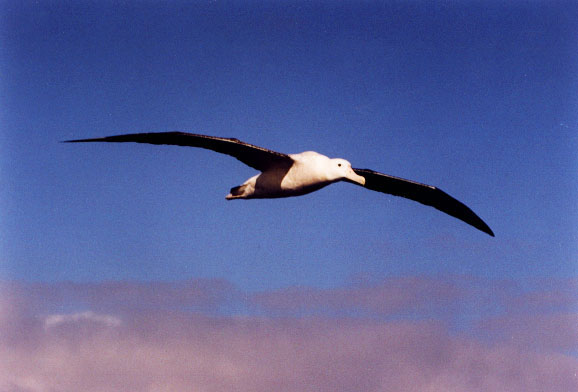
On a more peaceful note, there's also a special section about an amazing bird, my favourite bird, with a misconceived image I would like to see changed: the Albatross.
Order and Chaos
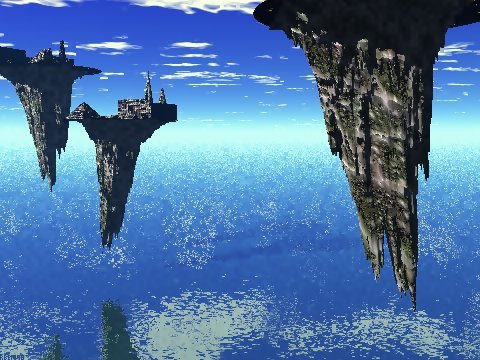
For those who aren't familiar with the title of this particular site the name "Castle Kaneloon" is taken from a series of books written by Michael Moorcock, the "Elric" saga, and epitomizes a point on a temporal plane where the forces of Law battle with Chaos to create "Order" and where "Chaos" does everything in its power to maintain an equal, healthy balance. An appropriate reference reflecting the labours of humanity, who persistently, vainly and shortsightedly believes he can go against Mother Nature only to stand forlorn in the face of calamities such as those experienced on December 26th, 2004, in Southeast Asia; in September 2005 in the Gulf of Mexico; and on 27 other occasions in 2006 in the North Atlantic.
The day afterMan sees himself as being "Order" and considers Mother Nature chaotic, but let's just rectify a point. Nature appears wild and unpredictable, to be tamed by man's designs. Nature is certainly impossible to restrain, both creative and, at the same time, destructive, but nature is also imperial in her never random disorder. Everything she does has a purpose (I almost said "logic," but how can you rationalise nature?). Although Mother Nature appears cruel in her disdain for mankind's plans, everything she does is simply a "natural" action that not even the Ancient Alien theorists can appropriate. If only man would understand that if he disappeared off the face of the earth tomorrow, Mother Nature would simply carry on as if man had never existed, eradicating all traces of man, time-wise, in the wink of an eye.
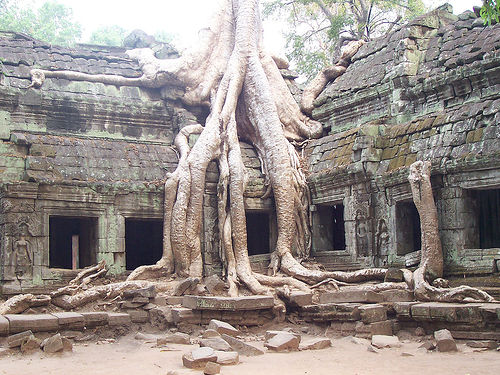
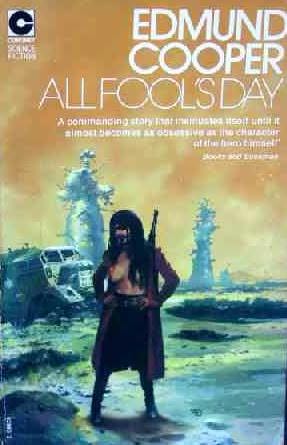
Picture the scene. An unknown form of solar radiation, or some other specific and selective menace, wiped Mankind – and just Mankind - off the face of the planet! With no Mankind around, within six months to one year, highways of the world would be green walkways; within 2 years, kilometre-high skyscrapers would start looking like modern-day hanging gardens of Babylon or long-lost jungle temples. This seemed far-fetched until I also saw a documentary on cable TV about just such a scenario, and I remembered a super science fiction novel I'd read some years ago by the late English author, Richard Cooper.
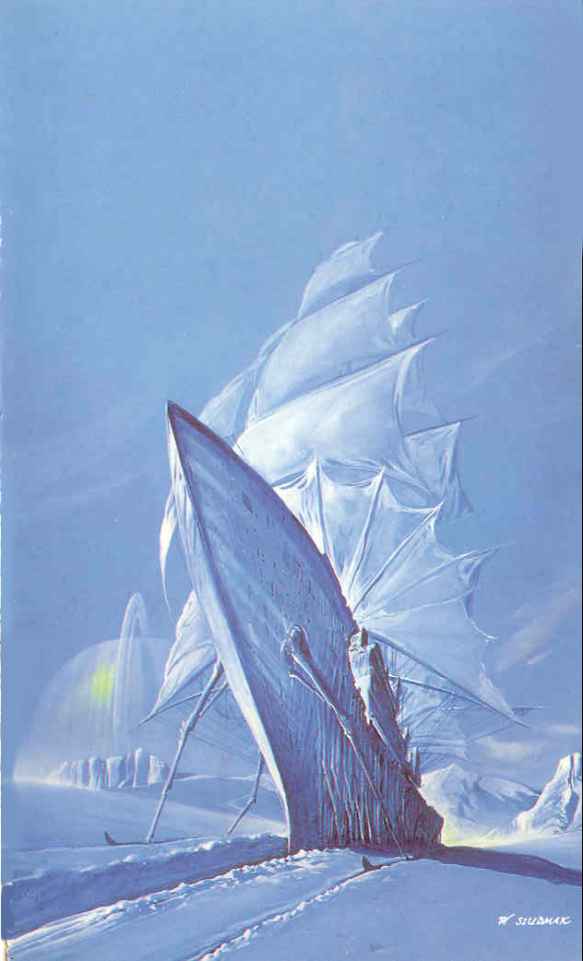
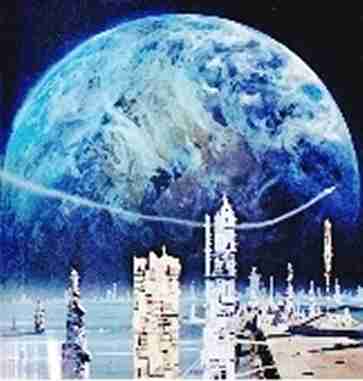
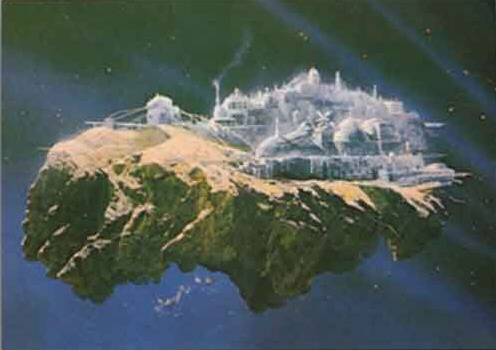
With the possibility of something as dangerous happening, it's worth mentioning that in Moorcock's saga the mythical Castle Kaneloon has the ability to move whenever new lands are created, thus always remaining on the edge of the world and out of reach of all potential danger. Just think what certain "Super" powers would give to be able to do that. Picture the image. Do megacities in the USA, Europe or China decide to install super-new technology engines under their cities and, one day, simply take off and go and populate another planet, leaving the rest of the world to fend for its poor, decimated and expendable self? It makes you wonder how people such as the authorJames Blish or Richard Cooper think of such things.
Introspection
As you may have gathered by now, this site is an introspection about the vagaries of Mother Nature, the causes and effects on humanity and the adverse effects of mankind's tinkering with Mother Nature. Generally, we call severe weather or geological hazards "'natural disasters'" and make a big media circus out of them, discreetly forgetting catastrophes such as Bhopal and judging a 7-foot" drop in the water level of the Great Lakes to be insignificant (as reported in the International Herald Tribune, 26/10/2007). Thankfully, the collective conscience is getting organised and using the same media tools the lobbies use to promote their interests, such as for biofuels that are wreaking havoc in Brazil and Indonesia.
Mankind is slowly beginning to understand that the frenetic race for technological superiority is coming at a cost and weakening man's resilience to severe weather phenomena. The impact on the planet is immediate. Immediate on a geological time scale and immediate on a human time scale: Mega-cities are creating islands of heat in normally temperate zones, glaciers are receding, sub-polar permafrost is melting, creating sinkholes and releasing methane gases that need igniting to impede more serious health hazards, and the idyllic "Maldives archipelago" is now facing the very serious risk of sinking below the waves. Even the hardiest of anti-climate change lobbyists are finding it more and more difficult to convince the general public of the contrary, and stonewalling is not an option, neither is sticking one's head in the sand and denying that the problem exists.
Other stuff from...
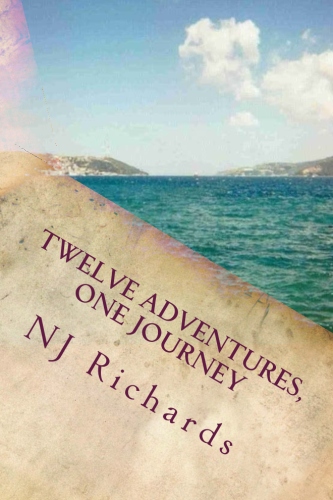
Travelogues written and published by the author:
Blogs from the author: Albatross 133 @Wordpress Other sites from the author:
Favourite TV travel show of the moment: Anthony Bourdain's "The Layover" |





© 2015 Nick Richards.